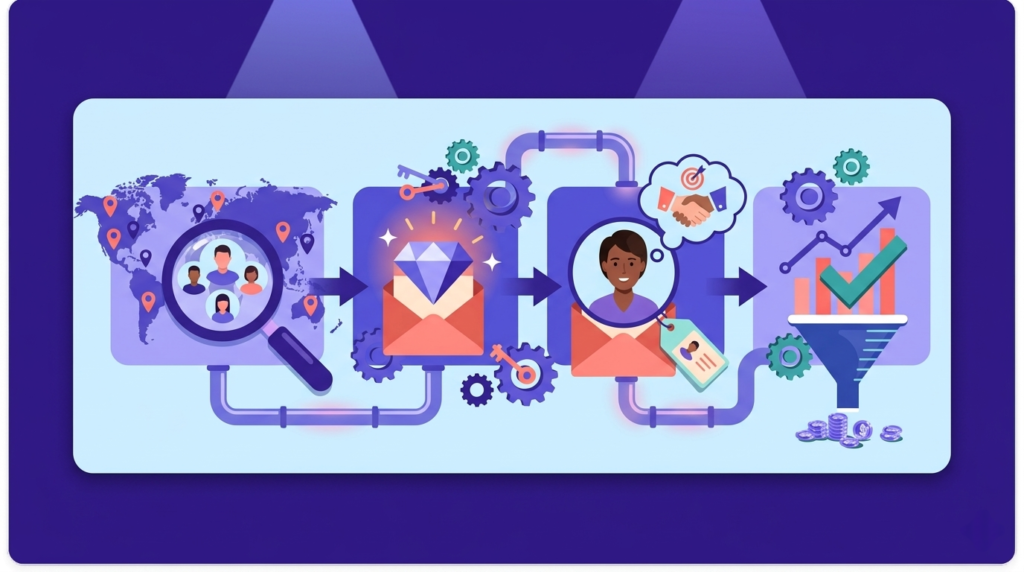

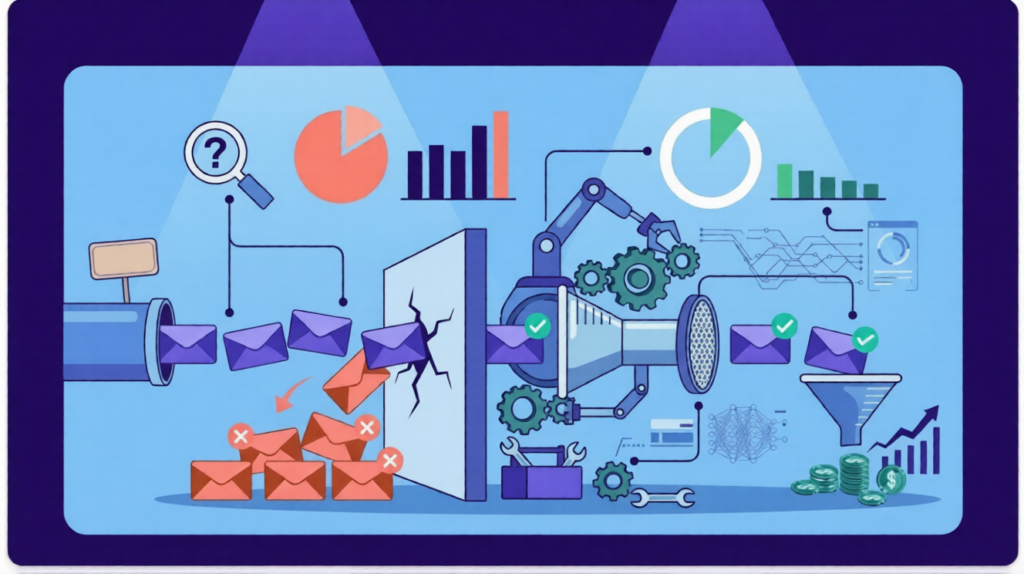

We’ve tested more than 60 lead generation databases across different industries, regions, and use cases. Some worked great while others were overpriced. After sending millions of cold emails, one thing became clear: there is no single tool that gives you perfect data. Every serious outbound system is built on stacked sources, redundancy, and verification.
This article breaks down the exact tool categories we use, why each matters, and how they fit together to produce better targeting and higher reply rates.
Contact & Lead Databases
Contact and lead databases are your foundation. These tools provide names, job titles, companies, and basic firmographic filters. We use them to build the first version of any list before enriching or validating it with other sources.
Apollo
Our default starting point for bulk contact discovery. Affordable, fast, and flexible for building large ICP-based lists.
Strong source for phone numbers and supplemental contact data. We mainly use it as a backup database.
Prospeo
Useful for both emails and phone numbers. Works well in waterfall enrichment flows when a primary source misses data.
Excellent for finding lookalike companies based on your best customers. Great for expansion lists.
Crunchbase
Best for funding and growth signals. Ideal when targeting recently funded companies.
Pitchbook
Deep coverage on private company revenue, funding, and financials. More expensive, but powerful for high-ACV targeting.
LeadMagic
Combines contact data with technographics, ad spend insights, and job information.
Owler / Harmonic / DoAI
Higher-end datasets focused on company intelligence. Useful when you need richer firmographic detail.
Sales Navigator (LinkedIn)
One of the most reliable sources for fresh titles, roles, and company changes. Often used alongside scraping.
SaasyDB
Prebuilt SaaS-focused company database. Helpful when selling exclusively to software businesses.
Technographics & Website Data
Technographics tell you what software a company uses and how their website is built. This data is incredibly useful for segmentation and eventual personalization. Instead of guessing who might need your product, technographics let you filter based on real usage.
Examples:
- Companies using HubSpot
- Stores built on Shopify
- Businesses running Webflow
- Teams using Salesforce
BuiltWith
Shows which technologies are installed on a website, historical changes, and usage patterns. Great for building highly targeted lists.
PredictLeads
Strong alternative to BuiltWith that combines technographics with hiring data. Useful for spotting buying signals.
Wappalyzer
Lightweight option for checking tech stacks quickly. Good for spot checks and small projects.
WhatRuns
A browser-based tool for identifying CMS, analytics, and plugins.
Netcraft
Helpful for infrastructure-level data such as hosting, servers, and site technologies.
IP Query / Patent Data
Niche datasets we occasionally use for specialized targeting, such as companies owning specific patents or operating within narrow technical categories.
E-commerce Data
When selling to e-commerce brands, generic business databases are often not enough. You need datasets that focus specifically on online stores, platforms, and store-level signals.
This category will help you identify:
- Active stores
- Platform (Shopify, WooCommerce, Magento, etc.)
- Estimated revenue ranges
- Store size and growth stage
StoreLeads
This is a go-to e-commerce database. Covers millions of stores with platform data, revenue estimates, and contact details. Often sufficient as a standalone source.
E-commerce company database focused on brand-level insights. Useful as a secondary source.
Another e-commerce-focused dataset for store discovery and enrichment.
Local Business / Map Scraping
For local businesses, traditional B2B databases may not be the best. Most local companies never appear in Apollo, Crunchbase, or similar tools.
Instead, we reccomend on map-based and directory scraping. This category is ideal for:
- Restaurants
- Dentists
- Gyms
- Contractors
- Clinics
- Local service businesses
PhantomBuster
Automation platform with ready-made scrapers for Google Maps, LinkedIn, Twitter, and Instagram.
OutScraper
Our preferred tool for Google Maps scraping. Simple, fast, and accurate for pulling business listings and contact info.
D7 Lead Finder
Popular local lead generation tool for city + category searches.
Yelp
Public directory that can be scraped or manually mined for local business data.
Social / Content Data
Social and content-based datasets help find people who are actively creating creative/relevant content, speaking, or publishing. This data is gold for personalization. You can reference:
- A podcast episode
- A tweet
- A LinkedIn post
- A community they run
PSeeker / GoCo
Excellent for podcast discovery. Lets you find hosts, guests, and show metadata. Great for warm personalization.
ScrappyBird
Instagram scraping tool for pulling profiles, bios, and sometimes contact data.
TweetScraper
Scrapes Twitter/X profiles, tweets, and followers.
Slack Scrapers
Used for extracting data from public Slack communities and directories.
Healthcare Data
Healthcare is one of the hardest industries to source reliably. Most general-purpose databases have poor coverage, outdated records, or shallow data for hospitals, clinics, and healthcare operators. For serious healthcare targeting, use specialized datasets.
DefinitiveHC
Healthcare-focused intelligence platform covering hospitals, health systems, clinics, and provider organizations. Includes firmographics, technographics, and operational data. It’s expensive, but necessary if healthcare is a core vertical.
Agency Directories
Agencies are easy to find but hard to segment properly with standard databases.
Directories solve this by grouping agencies by:
- Service type
- Industry focus
- Location
- Company size
A primary agency directory. Strong filters, reviews, and company profiles.
Another agency directory with global coverage.
Simple directory for discovering digital agencies.
PE / VC Data
Private equity and venture capital data is useful for:
- Finding portfolio companies
- Tracking ownership changes
- Identifying newly funded businesses
- Targeting investors themselves
This category is especially valuable for high-ticket B2B and enterprise offers.
Grata
Strong PE-focused dataset with company, owner, and transaction data.
SourceScrub
Large database of private companies and PE-backed businesses.
Connect
PE/VC dataset for sourcing firms and portfolio companies.
VC-focused platform with startup, investor, and portfolio insights.
Ad Libraries
Ad libraries show what companies are actively advertising. This is intent data. If a business is running ads, it is spending money and actively trying to grow. We use ad libraries to:
- Spot aggressive advertisers
- Identify offer angles
- Build targeted lists
Facebook Ad Library
Public database of active Facebook and Instagram ads. Can be scraped for advertiser data.
Google Ads Library
Shows ads running across Google properties. Less commonly used, but still valuable.
Lead Verification Tools We Use
Verification tools ensure the emails you plan to send actually exist. No matter how good your databases are, you should never send without verification. Even premium data sources contain invalid or outdated emails.
This layer protects:
- Bounce rate
- Domain reputation
- Deliverability
MillionVerifier
Our default choice. Affordable and fast.
LeadMagic
Low-cost verifier that also handles catchall detection.
ZeroBounce
Enterprise-grade verification with deeper diagnostics.
BounceBan
Best-in-class for catchall verification.
Scraping Tools
Scraping gives you access to data that no database sells. We use scraping when:
- Data is locked inside directories
- Niche sites hold valuable lists
- Platforms don’t offer exports
Python
Used for custom-built scrapers and advanced workflows.
Apify
Cloud-based scraping platform with many prebuilt actors.
Instant Data Scraper
Chrome extension for simple table scraping.
Browserflow.app
Automation + scraping tool for browser-based workflows.
Custom Developer-Built Scrapers
Used for unique websites and complex extraction needs.
Lead Generation Stack Strategy Used by Aerosend
It would be stupid to rely on one “perfect” tool. So we don’t. Our approach:
- 1 primary paid database
- 1–2 backup databases
- Technographics layer
- Verification layer
- Scraping where needed
If one source fails, the system still works.