

LinkedIn is the most effective outbound channel for B2B, but manual outreach does not scale.
Sending connection requests, tracking replies, and consistently following up become difficult as volume increases. Most outreach fails not because of targeting or messaging, but because of inconsistent execution.
LinkedIn automation solves this by handling repetitive actions such as sending requests and follow-ups. It allows founders, sales teams, agencies, and recruiters to run structured outreach at scale while maintaining consistency.
This guide explains what LinkedIn automation is, how it works, the limits you must follow, and how to use it safely to generate conversations and opportunities.
📋 Table of Contents
- TL;DR
- What Is LinkedIn Automation?
- How LinkedIn Automation Works
- How LinkedIn Detects Automation
- Is LinkedIn Automation Safe?
- LinkedIn Automation Limits
- Warming Up a LinkedIn Account
- Profile Optimization for Higher Acceptance Rates
- Best LinkedIn Automation Tools (2026)
- LinkedIn Automation Pricing Explained
- Multi-Account LinkedIn Automation
- What It Takes to Win on LinkedIn in 2026
Quick Comparison: Best LinkedIn Automation Tools (2026)
| Tool | Best for | Type | Pricing | Multi-Channel | Multi-Account | Free Trial |
|---|---|---|---|---|---|---|
| HeyReach | Agencies, scaling | Cloud | $79+/seat | No (LinkedIn only) | Yes (unlimited) | Yes (7 days) |
| Expandi | Safety, personalization | Cloud | $99+/account | Yes (LinkedIn + email) | Yes (per-account) | Yes (7 days) |
| Dripify | Sales teams | Cloud | $39+/user | Yes (LinkedIn + email) | No | Yes (7 days) |
| Waalaxy | Beginners | Cloud | Free to $56/mo | Yes (LinkedIn + email) | No | Free plan |
| PhantomBuster | Scraping, workflows | Cloud | $59+/mo | No (data-focused) | Yes | Yes (14 days) |
| Salesflow | Sales outreach | Cloud | $99+/mo | Yes (LinkedIn + email) | Yes | Yes (7 days) |
| La Growth Machine | Multi-channel | Cloud | $60+/mo | Yes (LinkedIn + email + phone) | No | Yes (14 days) |
| Linked Helper | Budget users | Browser | $15+/mo | No (LinkedIn only) | No | Yes (14 days) |
What Is LinkedIn Automation?
LinkedIn automation is software that performs repetitive LinkedIn actions on your behalf. LinkedIn automation refers to tools that automate user actions such as connecting, messaging, and engaging with profiles.
Automation exists because LinkedIn outreach has a hard ceiling when done manually. A human can realistically send 20 to 40 quality connection requests per day. Beyond that, consistency drops, follow-ups are missed, and opportunities are lost.
Automation solves the execution layer. It handles timing, tracking, and sending. You focus on targeting, messaging, and conversations. It is important to look at automation as an efficiency tool instead of a growth shortcut. Results still depend on targeting quality, profile positioning, and message relevance.
These tools operate through either cloud infrastructure or controlled browser sessions. They execute actions with delays, limits, and scheduling to replicate human usage patterns. The aim is to be consistent and build a foolproof system. Without automation, follow-ups are inconsistent. Prospects fall through the cracks. Outreach becomes dependent on manual discipline. Automation removes this bottleneck.
For example, instead of manually remembering to follow up with 100 prospects, the tool automatically sends follow-ups at predefined intervals.
What LinkedIn Automation Can Do
Automation tools can handle the entire outbound workflow from initial contact to follow-up.
Connection requests: Tools can send connection requests to targeted prospects from Sales Navigator searches, lists, or profile URLs.
Follow-up messaging: Automated sequences send follow-ups based on timing rules. For example, a follow-up 3 days after connection acceptance.
Inbox management: Some tools provide unified inboxes to manage conversations across multiple LinkedIn accounts.
Profile visits: Visiting profiles increases visibility and often leads to inbound profile views and connection requests.
Lead scraping: Tools extract lead data from LinkedIn searches, including name, company, role, and profile URL.
Engagement actions: Some tools can like posts or view profiles to create light-touch engagement before outreach.
Campaign management: Tools organize outreach into structured campaigns with defined messaging steps and timing.
Automation ensures every lead receives consistent and timely outreach.
What LinkedIn Automation Is Not
LinkedIn automation is not a spam tool.
Most account bans happen because users send high-volume, low-relevance messages. Automation amplifies both good and bad behavior. If targeting and messaging are poor, automation accelerates failure.
Automation is also not fully autonomous.
Replies require human handling. Conversations require context, judgment, and intent. Automation can initiate conversations, but cannot replace human interaction.
Automation is not officially supported by LinkedIn.
LinkedIn’s business model prioritizes platform integrity and user experience. Automation tools operate externally and must follow strict behavioral safety patterns to avoid detection.
Finally, automation is not a substitute for positioning.
If your profile is weak, your acceptance rate will be low regardless of automation quality. Automation increases volume. It does NOT fix foundational problems.
How LinkedIn Automation Works
At its core, LinkedIn automation is just software controlling your LinkedIn account with structure and timing.
Instead of you manually sending requests and follow-ups, you define the campaign once. You set the daily limits, the message sequence, and the targeting. The tool then executes those actions gradually throughout the day.
Nothing happens instantly. Everything is queued and spaced out.
This is why automation scales outreach. It removes the manual execution layer while keeping activity consistent.
Cloud-Based vs Browser-Based Automation
There are two types of LinkedIn automation tools. The difference matters.
Cloud-based tools
Cloud tools run on remote servers. You connect your LinkedIn account, set your campaigns, and the tool runs them in the background. Your computer does not need to stay on. The campaigns continue running regardless.
This is what most agencies, founders, and sales teams use because it is reliable and scalable. You can manage multiple LinkedIn accounts and campaigns from one dashboard. Cloud tools are built for long-term, consistent outreach.
Browser-based tools
Browser tools run inside your Chrome browser. This means they only work when your browser is open and your computer is running.
If your laptop sleeps, the campaign stops. If your browser crashes, execution stops. These tools are usually cheaper, but they are less reliable and harder to scale. They are fine for small-scale use. They are not ideal if outreach is a core acquisition channel.
How Automation Mimics Human Behavior
Good automation tools are designed to behave like a normal LinkedIn user. They do not send everything instantly. They spread actions naturally.
Randomized delays
Each action is separated by variable time intervals. This prevents predictable execution patterns. Instead of fixed timing, delays vary dynamically between actions. Sometimes it waits 40 seconds, sometimes 2 minutes, and sometimes longer. This prevents predictable patterns.
Time-based scheduling
Campaigns operate within defined daily activity windows. This creates structured outreach cycles rather than continuous execution. Actions happen during defined hours, usually normal working hours. This keeps activity aligned with real usage patterns
Action distribution
Instead of sending all requests at once, actions are spread evenly throughout the day. This prevents activity clustering, which is a common indicator of automation. The activity stays consistent and controlled.
Session persistence
The tool maintains a consistent session, so your account behaves as if it is being used from one stable environment. This avoids sudden changes in activity context.
How LinkedIn Detects Automation
LinkedIn does not detect automation just because you use a tool. It detects abnormal behavior.
There are two main ways this happens
Infrastructure analysis
LinkedIn evaluates session stability, login continuity, and environment consistency. LinkedIn monitors how your account is accessed. If your account activity shows unstable session patterns or inconsistent access environments, that creates risk signals.
Execution pattern analysis
This is the bigger factor. LinkedIn monitors how your account behaves.
Indicators include:
- Sudden increases in activity volume
- Highly uniform action timing
- Continuous execution without natural pauses
If you suddenly send far more requests than usual, or if your outreach is consistently ignored, that lowers trust. If your activity looks structured, consistent, and normal, automation can run safely.
Feedback-based signals
User feedback plays a major role.
Signals include:
- Ignored connection requests
- Message dismissals
- Negative engagement signals
These indicators affect account trust levels.
Automation tools operate safely when execution patterns align with normal human usage distribution.
Is LinkedIn Automation Safe?
Yes, but only if you use it correctly.
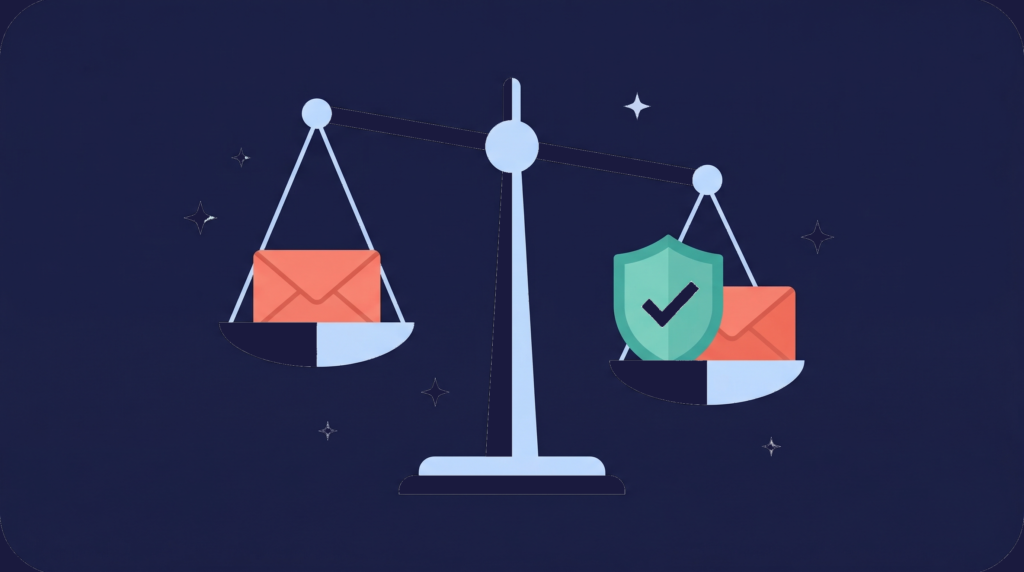
Automation is safe when it supports normal outreach behavior. It becomes unsafe when it pushes beyond normal usage patterns. If your targeting and pacing are good, automation improves results safely. If your execution is aggressive or careless, automation accelerates problems.
LinkedIn’s Official Stance
LinkedIn does not support external automation tools.
Their policies prohibit automated activity that interacts with the platform through unofficial interfaces.
Enforcement mechanisms include:
- Temporary activity restrictions
- Identity verification checkpoints
- Session resets and forced password changes
- Permanent account suspension in severe cases
Permanent bans typically occur only after aggressive behavior continues despite warnings. LinkedIn gives signals before taking serious action. Enforcement severity increases when abnormal patterns persist over time.
When LinkedIn Automation Is Safe
The infrastructure approach a tool uses matters enormously here. Tools that route activity through LinkedIn’s mobile app APIs, rather than simulating browser actions, produce significantly more human-like session signals. SalesRobot, for instance, uses LinkedIn’s mobile APIs on the backend specifically to reduce the risk of bans, a meaningful architectural distinction from tools that rely on browser emulation.
Beyond the tool itself, automation works safely when:
- Automation works safely when the account behaves like a normal active user.
- Older accounts are more stable because they already have a usage history.
- Consistent daily activity is safer than sudden spikes.
- Gradual scaling works better than aggressive scaling.
- Strong targeting also makes a big difference. When people accept your requests and engage, LinkedIn sees that as normal professional activity.
- Automation performs best when it supports relevant outreach.
When LinkedIn Automation Gets Accounts Banned
Restrictions occur when automation introduces abnormal activity patterns or unstable execution environments. The most common causes include:
- Aggressive volume from day one. Sending 50+ connection requests daily on a new or dormant account is the fastest path to restriction.
- Low acceptance rates. If fewer than 20-30% of your connection requests are accepted, LinkedIn interprets your outreach as irrelevant or spammy. This alone can trigger limits regardless of volume.
- Unstable infrastructure. Frequent IP changes, logging in from multiple locations simultaneously, or using browser extensions that inject detectable code into LinkedIn’s DOM all create risk signals.
- Identical messaging at scale. Sending the exact same message template to dozens of prospects in a short window triggers text pattern matching. Vary your copy.
- Ignoring warnings. LinkedIn typically issues soft warnings (verification prompts, temporary send limits) before hard restrictions. Continuing to push volume after a warning escalates enforcement.
- Running multiple automation tools on the same account. This compounds action counts and creates conflicting session data. Use one tool per account.
Automation safety is determined by operational consistency and execution discipline. The software enables scale, but account stability depends on how it’s managed.
What to Do If Your LinkedIn Account Gets Restricted
If LinkedIn restricts your account, do not panic. Most restrictions are temporary and recoverable.
Immediate steps:
- Stop all automation immediately. Do not try to switch tools or resume sending.
- If LinkedIn asks for identity verification, complete it promptly. Submit your government ID if requested.
- Do not change your password unless LinkedIn forces it. Unnecessary password changes can create additional flags.
Recovery protocol:
- Wait 3 to 7 days with zero automation activity. Use LinkedIn manually during this period: browse your feed, reply to existing conversations, engage with posts.
- After the waiting period, send 5 to 10 manual connection requests over 2 to 3 days. If these go through without issues, your account is recovering.
- Reintroduce automation at 50% of your previous volume. Increase by 10-15% per week if no warnings appear.
- Never restart automation tools before testing manual sends first. This is the most common mistake that turns a temporary restriction into a permanent one.
If your account is permanently suspended:
LinkedIn may require an appeal. Submit it through the help center with a professional explanation. Avoid mentioning automation tools. Focus on your intent to use LinkedIn for legitimate professional networking. Recovery can take 1 to 4 weeks.
LinkedIn Automation Limits (Daily, Weekly, Monthly)
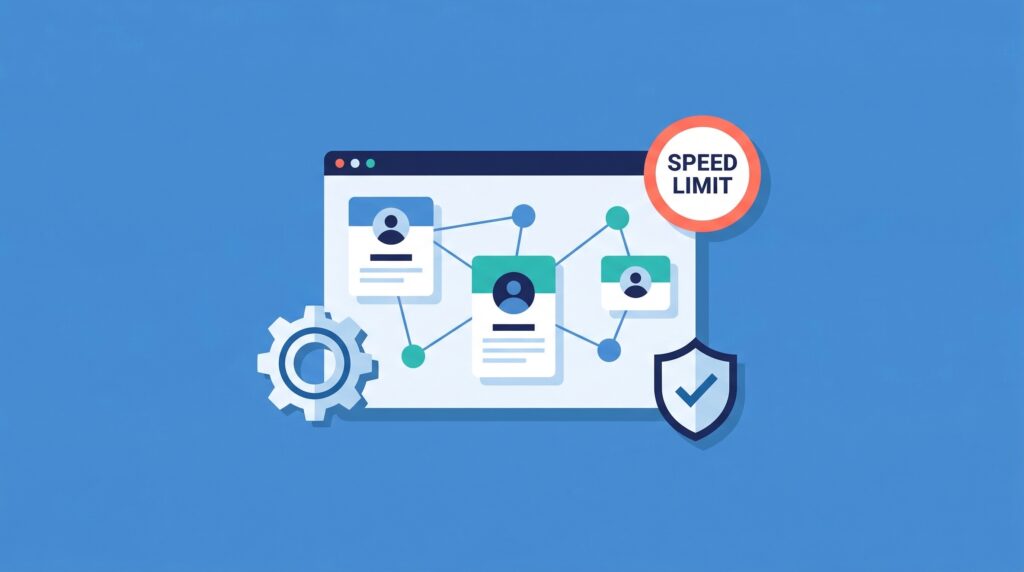
LinkedIn automation is constrained by behavioral limits. These limits are not publicly defined, but they are enforced through monitoring activity volume, timing, and response patterns.
You must stay within normal human behavior ranges while maintaining consistent outreach. Exceeding limits does not improve results. It increases restriction risk and reduces long-term account stability.
The limits below reflect safe operational ranges used by sales teams, agencies, and outbound operators in 2026.
Daily Limits (Per Account)
Daily limits apply to individual LinkedIn accounts, not automation tools. The tool does not protect you if the account exceeds safe thresholds.
Connection requests: Safe range is 20 to 40 per day per account. New or recently inactive accounts should start lower at 5 to 15 per day and increase gradually.
Messages: Safe range is 30 to 60 outbound messages per day. This includes follow-ups and direct messages to existing connections. This does not include replies. Reply volume is not restricted in the same way.
InMail messages: LinkedIn Premium accounts can send up to 25 InMails per day. LinkedIn Recruiter users are limited to 200 InMails during their first week, increasing to 1,000 per month after that. InMails that receive replies return the credit, so high-quality InMails effectively increase your sending capacity.
Profile views: Free accounts can safely view up to 250 profiles per day. Premium and Sales Navigator accounts can handle up to 500 to 1,000 views per day. Viewing more than these thresholds, especially in rapid bursts, can trigger scraping detection. Spread profile views throughout the day the same way you space connection requests.
Total actions: Total daily actions, including profile views, connection requests, and messages, should remain between 80 and 200 actions per day.
Actions should be distributed naturally throughout the day. Large bursts increase detection risk.
Consistency is more important than volume. A stable 30 requests per day is safer than alternating between 10 and 80.
Weekly and Monthly Limits
LinkedIn enforces limits over longer timeframes to detect automation patterns.
Weekly invite limits: Most accounts can safely send 100 to 200 connection requests per week. If acceptance rates are high and the account is aged, this threshold becomes more flexible. Poor acceptance rates automatically reduce the limit.
The weekly limit resets on a rolling 7-day window, not on a fixed calendar day. If you sent your first batch of requests on a Wednesday at 2 PM, your limit refreshes the following Wednesday at the same time.
LinkedIn may also temporarily restrict accounts that exceed behavioral norms, even if daily limits appear safe.
Monthly limits enforced by tools: Many automation platforms enforce monthly limits to reduce risk.
Typical ranges include:
- 600 to 800 connection requests per month per account
- 1,000 to 2,000 total automated actions per month per account
These limits exist to maintain long-term account stability.
Scaling beyond these limits requires multiple accounts. This is how agencies and sales teams increase outreach safely without overloading individual accounts.
Factors That Affect LinkedIn Automation Limits
Limits vary significantly depending on account quality and behavioral history.
Account age
Older accounts have higher trust scores. Accounts older than 6 months with consistent activity can safely operate at higher volumes.
New accounts are the highest risk and should be warmed up gradually.
Premium and Sales Navigator subscriptions
Accounts with LinkedIn Premium or Sales Navigator typically have higher operational thresholds. These accounts demonstrate legitimate business usage and established intent.
Sales Navigator also improves targeting precision, thereby increasing safety by increasing acceptance rates. However, Premium and Sales Navigator do not increase the weekly connection request limit. Their value is better search filters and InMail credits, not a higher invitation cap.
Social Selling Index (SSI) score
Your LinkedIn SSI score is a 0 to 100 rating that reflects how effectively you use LinkedIn across four categories: establishing your professional brand, finding the right people, engaging with insights, and building relationships. You can check your score at linkedin.com/sales/ssi.
SSI directly influences your operational headroom. Accounts with an SSI above 40 can generally operate at higher volumes with fewer restrictions. Accounts with an SSI below 20 should stay conservative, around 10 to 15 connection requests per day.
To improve your SSI: complete your profile fully, post content regularly, engage with others’ posts through meaningful comments, and connect with relevant professionals in your industry. A higher SSI signals to LinkedIn that you are a genuine, active user, which increases the trust your account receives.
Engagement history
Accounts with regular activity, such as posting, messaging, and connecting, are considered more trustworthy.
Dormant accounts that suddenly begin high-volume outreach are more likely to be restricted.
Acceptance rate
Acceptance rate is one of the strongest safety signals. A safe benchmark is 30% or higher.
Low acceptance rates signal irrelevant outreach. This increases the probability of restrictions regardless of volume.
High acceptance rates increase LinkedIn’s trust in the account and allow safer scaling.
LinkedIn automation limits are dynamic. They adjust based on how your account behaves. The safest strategy is gradual scaling, consistent activity, and maintaining high acceptance rates. Focus on account quality first and volume second to scale successfully.
Warming Up a LinkedIn Account for Automation
Before you automate a LinkedIn account, you need to warm it up.
Warm up means building a normal usage history so LinkedIn sees the account as a real, active professional account. Automation works best when it builds on existing behavior, not when it creates activity from zero.
If you skip the warm-up and automate immediately, the risk of restriction increases significantly.
Why You Should Never Automate a New Account
New LinkedIn accounts have no behavioral trust. LinkedIn does not know what a normal activity pattern looks like for that account yet. So when automation suddenly introduces consistent outreach, it stands out immediately.
New accounts are sensitive in three ways.
First, there is no historical activity baseline. Any outreach volume looks abnormal.
Second, new accounts have no engagement signals. No replies, no accepted requests, and no conversation history.
Third, LinkedIn monitors new accounts more closely to prevent spam and fake profiles.
Automating too early often leads to action limits or temporary restrictions. You need to establish normal usage first.
Step-by-Step Account Warm-Up Process
Warming up a LinkedIn account is simple. The goal is gradual activity increase over time.
Week 1: Establish normal activity
Send 5 to 10 connection requests per day manually.
Browse profiles, accept incoming requests, and reply to messages.
Show consistent human activity.
Do not use automation yet.
Week 2: Increase activity gradually
Increase to 10 to 15 connection requests per day.
Continue replying to conversations and engaging normally.
Consistency matters more than volume.
Week 3 to Week 4: Stabilize activity
Increase to 15 to 25 connection requests per day.
At this stage, LinkedIn begins recognizing your account as consistently active.
You can introduce automation at low volume during this phase.
After Week 4: Begin scaling slowly
Start automation conservatively.
Keep volume within safe limits. Increase gradually over time.
Avoid sudden jumps.
The full warm-up typically takes 3 to 4 weeks for accounts with some history, and 6 to 8 weeks for brand new or long-dormant accounts.
Profile Optimization for Higher Acceptance Rates
Warm-up is not just about activity. Your profile quality directly affects acceptance rates. Higher acceptance rates increase account trust and improve automation safety.
To optimize your profile effectively, focus on three areas.
Profile photo
- Use a clear, professional photo.
- Faces build trust. Avoid logos or low-quality images.
- People accept requests from profiles that look real and credible.
Headline
Your headline should clearly explain what you do and who you help.
Avoid vague titles.
Specific positioning improves acceptance rates.
For example, “Helping SaaS companies generate outbound pipeline” performs better than “Founder.”
About section
Your About section should explain your work, expertise, and focus. It does not need to be long. It needs to be clear. When someone checks your profile, they should immediately understand why you reached out.
Strong profiles increase acceptance rates. Higher acceptance rates increase account stability.
Best LinkedIn Automation Tools (2026)
Agencies need multi-account scaling, sales teams need CRM workflows, and beginners need simplicity. The best tool for you depends on your use case.
Below are 8 proven tools, with use case, suitability, and pricing.
1. SalesRobot
Best for: Sales teams and agencies that want LinkedIn + email combined with AI-powered inbox management
Suitability: B2B sales teams, lead gen agencies, founders
What it does well: SalesRobot is one of the few tools on the market that genuinely combines LinkedIn automation, cold email outreach, and AI inbox management in a single platform. Where most tools stop at sending messages, SalesRobot continues the conversation — its AI Appointment Setter replies to leads on your behalf until they are ready to book a call.
What also sets it apart technically is the use of LinkedIn’s mobile app APIs on the backend, rather than browser-based session simulation. This approach is meaningfully safer from a detection standpoint and is why its users report extremely low ban rates.
Key strengths:
- LinkedIn automation + unlimited cold email in one platform
- AI personalized voice notes and video messages on LinkedIn (customers report 40%+ reply rates)
- AI inbox manager that books meetings automatically
- Smart Reply Detection — messaging stops the moment a lead responds
- Works with free LinkedIn accounts (no Premium required)
- Multi-account management and team features
- Whitelabel option for agencies
Pricing: 14-day free trial, paid plans available at salesrobot.co/pricing
2. HeyReach
Best for: Agencies and high-volume outbound
Suitability: Agencies, lead gen teams, outbound infrastructure
What it does well: HeyReach is built specifically for multi-account LinkedIn outreach. You can connect dozens or hundreds of LinkedIn accounts and run one unified campaign.
Key strengths:
- Multi-account rotation
- Shared Sales Navigator access
- Unified inbox across all senders
- Built for scaling safely
This is why most agencies use it when they want to reach 1,000 to 10,000 prospects per week.
Pricing: Starts around $79 per month per seat
3. Expandi
Best for: Safety and advanced personalization
Suitability: Agencies, serious outbound teams
What it does well: Expandi focuses on safety and personalization depth. You can build complex campaigns with conditional logic, personalization variables, and behavioral triggers.
Key strengths:
- Cloud-based infrastructure
- Advanced personalization logic
- Smart limits and safety controls
- Campaign branching
Expandi is widely used by agencies and is considered a premium tool. Reddit users consistently mention Expandi as one of the main cloud-based tools alongside HeyReach and Dripify.
Pricing: Starts around $99 per month per account
4. Dripify
Best for: Sales teams and structured outreach
Suitability: SDR teams, founders, B2B sales orgs
What it does well: Dripify is designed like a sales engagement platform for LinkedIn. It gives visibility into campaigns, reply rates, and pipeline activity.
Key strengths:
- Visual drip campaign builder
- Team dashboards
- Performance analytics
- CRM integrations
It is ideal if you want structure, reporting, and automation.
Pricing: Starts around $59 to $79 per user per month
5. Waalaxy
Best for: Beginners and small teams
Suitability: Solo founders, freelancers, SMBs
What it does well: Waalaxy is simple and beginner-friendly. It has templates, onboarding flows, and minimal setup.
Key strengths:
- Very easy to use
- Email and LinkedIn combined outreach
- Templates included
- Free plan available
Many beginners choose Waalaxy because of its simplicity and lower barrier to entry.
Pricing: Paid plans start around $56 per month
6. PhantomBuster
Best for: Data scraping and custom workflows
Suitability: Growth hackers, technical users, list building
What it does well: PhantomBuster is not just an automation tool. It is an automation engine. You can extract data from LinkedIn searches, events, groups, and profiles.
Key strengths:
- Lead scraping from LinkedIn
- Data extraction automation
- Workflow automation via APIs
- Custom automations
It is powerful but requires technical setup. Reddit users highlight PhantomBuster as strong for scraping and flexible workflows.
Pricing: Starts around $59 per month
7. Salesflow
Best for: Sales teams scaling outreach
Suitability: SDR teams, outbound teams
What it does well: Salesflow is built around campaign execution and analytics. It helps teams track reply rates and optimize performance.
Key strengths:
- Campaign tracking
- Team workflows
- Unified inbox
- Campaign analytics
Good middle ground between agency tools and beginner tools.
Pricing: Starts around $99 per month
7. La Growth Machine
Best for: Multi-channel outreach (LinkedIn + email + calls)
Suitability: Sales teams, growth teams, founders wanting multi-channel
What it does well: La Growth Machine goes beyond LinkedIn-only automation. It orchestrates sequences across LinkedIn, email, phone, and Twitter in coordinated campaigns.
Key strengths:
- True multi-channel sequences with automatic enrichment
- Lead enrichment built into the workflow
- Automatic warm-up and safety limits
- Intent data integration for smarter targeting
If you want LinkedIn as part of a broader outbound motion rather than a standalone channel, LGM is purpose-built for that.
Pricing: Starts around $60 per month (Pro plan supports 3 users)
8. Linked Helper
Best for: Budget-conscious teams wanting browser-based control
Suitability: Individuals, small teams, recruiters
What it does well: Linked Helper is one of the oldest LinkedIn automation tools. It runs as a browser-based application with a local database and CRM-like lead management.
Key strengths:
- Affordable pricing for individual users
- Built-in CRM with tags and lead organization
- Profile auto-filler and endorsement automation
- Works with both free LinkedIn and Sales Navigator
It is less scalable than cloud tools but offers strong value for solo operators on a budget.
Pricing: Starts around $15 per month
LinkedIn Automation Pricing Explained
LinkedIn automation pricing is straightforward at a small scale, and punishing at a large scale if you choose the wrong model. Most teams don’t overspend on the tool itself. They overspend because of how the tool structures accounts, seats, and infrastructure. Understanding the distinction early prevents a lot of unnecessary cost as you grow.
Per-Seat vs. Per-Account Pricing
This is the most important structural decision, because it determines whether your costs scale with your team or with your LinkedIn accounts.
Per-seat pricing means you pay per user, regardless of how many LinkedIn accounts that user manages. One seat, one dashboard, multiple accounts. Pricing typically ranges from $59–$99 per seat per month, making this model cost-effective for agencies and teams running outreach across many profiles.
Per-account pricing means you pay for each LinkedIn profile connected to the platform, typically $39 to $99 per account per month. The math quickly turns against you: ten accounts mean ten subscriptions.
How to think about it: per-seat pricing scales with your team size; per-account pricing scales with your outreach volume. For agencies and outbound-focused teams, the per-seat model almost always wins.
Hidden Costs to Watch For
The tool subscription is just the beginning.
- Sales Navigator is essentially required for serious prospecting. It meaningfully improves targeting and list quality. Expect to pay around $99 per user per month.
- Proxies and infrastructure are another variable. Some tools bundle dedicated IP infrastructure, while others leave you to source it externally, typically adding $10–$30 per account per month. Cloud-based tools usually cover this. Browser-based tools usually don’t.
- Multiple LinkedIn accounts are where costs really compound. Scaling outbound means running more accounts instead of pushing higher activity on a single one, and every additional account multiplies your tool and infrastructure spend. This is the primary driver of cost at scale.
Lead data and enrichment round out the picture. Most automation tools don’t include verified emails or phone numbers, so a separate data tool is often necessary, with pricing that scales by volume.
How Agencies Scale Cost-Efficiently
Agencies scale by distributing activity across many accounts, and then building operations that keep that approach lean.
Here is how they control costs as they scale.
Account Rotation
Rather than sending 200 connection requests from a single profile, a well-run agency sends 20 requests from 10 accounts, rotating automatically through the tool. The result is higher total volume, lower risk per account, better deliverability, and predictable growth as you add capacity. This is the operational foundation of LinkedIn outbound at scale.
Shared Infrastructure
Centralizing resources is how agencies keep overhead from compounding. One team manages all LinkedIn accounts. One unified inbox handles every reply. One system runs all campaigns. Less duplication, lower operational cost, and easier management.
Seat-Based Pricing
This is the single biggest cost lever available to agencies. The difference is stark:
- Per-account model: 50 accounts × $79 = $3,950/month
- Per-seat model: 3 seats × $79 = $237/month
Same outreach capacity. A fraction of the cost. It’s why agencies gravitate toward tools built for multi-account management rather than tools priced per profile.
Centralized Campaign Management
The most efficient agencies run fewer campaigns across more accounts — not the reverse. Consolidating campaign logic reduces complexity, lowers cost, and tends to improve performance.
Your real LinkedIn automation cost depends on three factors:
- Number of LinkedIn accounts
- Pricing model of the tool
- Supporting infrastructure like Sales Navigator and data tools
Choosing the wrong pricing model can increase your costs by 5 to 10 times as you scale.
Multi-Account LinkedIn Automation (How Teams Scale Safely)
If you want to reach more than a few hundred prospects per month on LinkedIn, one account won’t get you there. Every serious outbound team runs multiple accounts because distributing activity across profiles is the only way to grow volume without growing risk.
Why Single Accounts Don’t Scale
LinkedIn limits how much any one account can do, and those limits exist for good reason. Even used optimally, a single account can reach roughly 400–800 new prospects per month, including connection requests and follow-ups. That’s a hard ceiling.
If your outbound pipeline runs through a single account and that account is restricted, everything stops. Multi-account outbound scales better and is structurally more resilient.
How Account Rotation Works
Account rotation lets a single campaign run across multiple LinkedIn profiles simultaneously. You connect several accounts to your automation tool, build one campaign, and the system distributes outreach automatically. Each account contacts a portion of the audience while staying well within safe activity limits.
In practice, it looks like this: four accounts each contact 25 prospects per day, producing 100 daily touchpoints from a single campaign. Volume scales linearly as you add accounts. Risk stays flat because no individual profile is being pushed.
Multi-Account LinkedIn Automation (How Teams Scale Safely)
If you want to reach more than a few hundred prospects per month on LinkedIn, one account won’t get you there. Every serious outbound team runs multiple accounts because distributing activity across profiles is the only way to grow volume without growing risk.
Why Single Accounts Don’t Scale
LinkedIn limits how much any one account can do, and those limits exist for good reason. Even used optimally, a single account can reach roughly 400 to 800 new prospects per month, including connection requests and follow-ups. That is a hard ceiling.
If your outbound pipeline runs through a single account and that account is restricted, everything stops. Multi-account outbound scales better and is structurally more resilient.
How Account Rotation Works
Account rotation lets a single campaign run across multiple LinkedIn profiles simultaneously. You connect several accounts to your automation tool, build one campaign, and the system distributes outreach automatically. Each account contacts a portion of the audience while staying well within safe activity limits.
In practice, it looks like this: four accounts each contact 25 prospects per day, producing 100 daily touchpoints from a single campaign. Volume scales linearly as you add accounts. Risk stays flat because no individual profile is being pushed.
Tools Built for Multi-Account Management
Running multiple accounts manually is not realistic. The right tools handle three things that make this workflow viable at scale.
- Unified inbox consolidates replies from every connected account into a single dashboard. Without it, managing conversations across profiles becomes unworkable as volume grows.
- Deduplication ensures the same prospect is not contacted by multiple accounts. When sender profiles are targeting overlapping audiences, this protection matters both for brand perception and for avoiding wasted outreach.
- Safety controls keep account activity within patterns that look human: paced sending speeds, account-level separation, and infrastructure that prevents linked profiles from being flagged together. Scaling volume should not mean accepting account instability, and purpose-built tools are designed to keep both in check.
Single accounts create a ceiling. Multi-account systems replace that ceiling with a predictable scaling model: more accounts, more capacity, without compounding risk.
What It Actually Takes to Win on LinkedIn in 2026
LinkedIn automation has matured. What worked in 2020 does not work in 2026. The platform is stricter, detection is smarter, and tolerance for low-quality outreach is lower than ever.
If you are still viewing automation as a risk, pause and touch grass. Poor infrastructure, aggressive scaling, and lazy targeting are the real risks you should avoid.
Automation needs to be a part of your system if you want consistent results. The teams winning on LinkedIn use aged accounts, warm them up properly, and respect behavioral limits. They prioritize targeting quality over raw volume, and when they scale, they do it through account rotation rather than pushing single profiles past safe thresholds.
Tools matter, but infrastructure matters more. A good tool with a poor setup will fail. A well-configured system with appropriate safeguards can run reliably for years.
The most important thing to internalize is this: automation does not create demand. It amplifies your positioning, your targeting, and your messaging. When those are strong, automation becomes a predictable pipeline engine. When they are weak, more volume only accelerates the damage.
LinkedIn remains one of the highest-leverage outbound channels available. Automation is what makes it scalable.