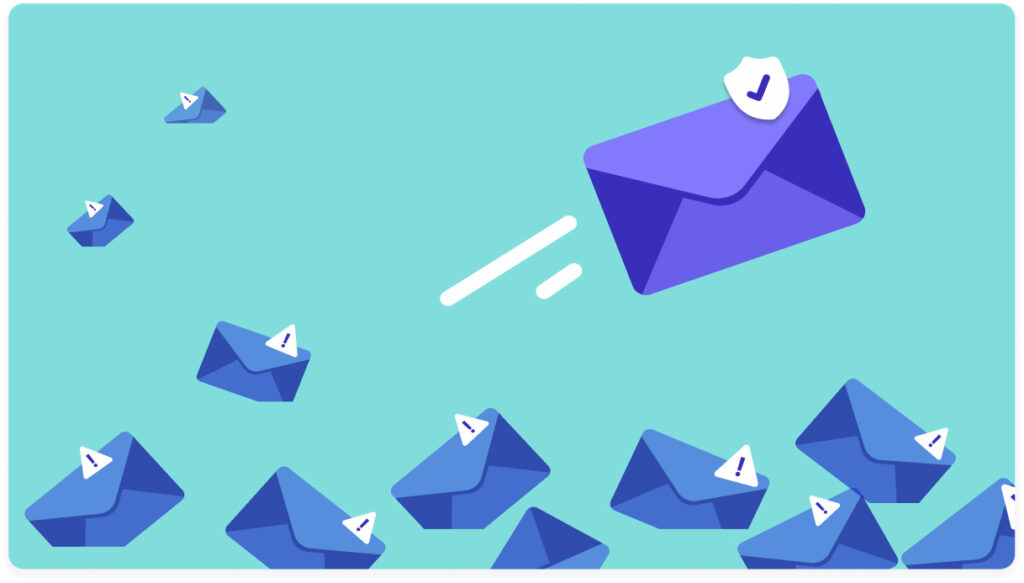


This blog breaks down the current state of Outlook email deliverability, providing advanced strategies, crucial test results, and essential workflows to ensure your cold emails bypass the spam folder and consistently land in the target inbox. The core philosophy is clear: deliverability today is a matter of consistency, sophisticated testing, and the implementation of robust systems, not a search for a single magic pill.
Establishing a Bulletproof Foundation
The journey to excellent Outlook deliverability begins with fundamental best practices and a rigorous approach to domain warm-up.
The Non-Negotiables
For those new to the space, the initial setup is crucial and should be executed without compromise:
- Diversify Your Assets: Always use multiple domains to spread risk and volume.
- Technical Excellence: Ensure your technical setup (SPF, DKIM, DMARC) is flawless from day one.
- Warm-up Duration: Commit to a 2 to 4 week warm-up period for all new domains.
- Content Simplicity: Start with plain text emails, completely avoiding links and open tracking in the initial stages.
- Copy Hygiene: Keep your email copy short, as long copies are frequently seen from beginner senders. Furthermore, ruthlessly eliminate common spam words that will actively hurt your performance.
- Audience Quality: This is critical. Focus on exceptional targeting and maintain a clean list. A simple yet highly effective hack is to randomly select 10 rows from your final list and manually cross-reference them against LinkedIn or company websites to ensure they are relevant. If you cannot provide value to 10 out of 10 of those leads, your list requires further cleaning.
The Role of Sequencers and Sending Fingerprints
The cold email sequencer or platform you choose plays a quiet but significant role in your deliverability.
- Warm-up Pool Quality: The sequencer’s built-in warm-up pool is the first factor. If you are using a provider’s warm-up feature, the quality of that pool directly impacts the reputation being built for your domain.
- Sending IP Fingerprint: Crucially, sequencers leave a fingerprint behind. When an email is sent, the messaging backend transmits a sending IP that is distinct from your Gmail or Outlook IPs. This infrastructure is constantly changing, which is why performance can fluctuate across different providers (e.g., Smartlead might outperform another). If you face sudden, major deliverability problems, reaching out to your sequencer’s support to request a change of your underlying sending IP or infrastructure can sometimes resolve the issue.
Advanced Warm-up Strategies for Outlook
Extensive testing has revealed that traditional warm-up methodologies often fail to optimize for Outlook. The following findings are essential for maximizing your inbox placement:
- Warm-up: Testing confirmed that domains where warm-up was disabled died quickly and performed poorly. Never run domains with warm-up off.
- The Problem with Burst Sending and Ratios: Many warm-up providers damage domain reputation by sending warm-up emails in large, irregular bursts, which is a highly unnatural and detrimental sending pattern. Furthermore, some free providers maintain horrible warm-up ratios, heavily favoring Google (50%) or random ESPs, with as little as 5% dedicated to Outlook/Hotmail/Live, guaranteeing poor Outlook performance.
- Paid Over Free: Paid warm-up pools heavily outperform free ones. The primary reason is that paid providers generally maintain cleaner, higher-quality inbox lists because they attract fewer spammers, who gravitate toward free options.
- The Power of Copy Warm-up: A surprising discovery is that warming up your actual email copy one week before launch works exceptionally well, leading to much higher reply rates upon campaign launch. This process involves sending your specific template to the warm-up pool to build reputation for the copy itself.
- Weekend Warm-up: There is no proven logic to only warming up on weekdays. Mimicking human sending is understandable, but testing confirms that keeping warm-up on for all seven days performs better.
- Avoid Spam Traps: Be aware that warm-up pools are actively catching spam traps. If you are using a lower-quality pool, you may face Private ESG blocks due to inadvertently hitting these traps.
Warm-up Provider Ranking (Based on Testing)
Based on recent testing, the following hierarchy of warm-up providers was established:
- Warm-up Inbox: Outperformed others, particularly due to high-quality inboxes and a bounce rate near zero.
- Warmy: Stable and reliable, but slightly edged out by Warm-up Inbox’s quality.
- Plus Vibe: Demonstrated a very good warm-up pool over a three-month period, especially noting a strong Google warm-up pool and good ratios.
- Smartlead.ai: Has significantly improved its warm-up pool, showing very good results, likely due to actively managing its large user base.
Domain and Reputation Management
Outlook has unique characteristics when it comes to domain age and longevity.
Aged Domains: The Outlook Deliverability Accelerator
The conventional wisdom that age domains are always superior is incomplete. Testing shows a clear split in performance based on the receiving ESP:
- Google: New domains surprisingly performed much better when sending to Google inboxes.
- Outlook: Aged domains were the clear winner. Approximately 70-75% of aged domains that survived the first month performed much better and lasted significantly longer than new domains. However, a notable 25-30% of aged domains died in the first month, so caution is advised.
When sourcing aged domains, buy from providers that have real registration dates and check for previous website history. It is also recommended to check the Spamhaus reputation before purchase.
The Lifespan and Recovery Loop
Outlook places extreme importance on the early reputation of a domain:
- The First Month Rule: If a domain performs well in the first 30 days, it is highly likely to continue performing well for a long time. If it dies early, recovery is exceptionally difficult.
- Domain Replacement: The future of cold email requires being ruthless about domain replacement. If a domain is underperforming based on low reply rates or high bounce rates (especially after 300-500 emails sent in a month), it must be removed and replaced with a backup.
- Longer Warm-up Works: Hard data confirms that a 4-week warm-up on a new domain significantly outperforms a two-week warm-up.
- 2 Weeks On, 2 Weeks Off: Implementing a cycle of running a domain for two weeks and then resting it for two weeks showed exceptional results in terms of domain longevity.
- ESG Block Protocol: If you receive a block from an Email Service Gateway (ESG) like Proofpoint, you must immediately slow down sending on that domain. Continuing to send will lead to the domain dying out completely.
Content and Sending Pattern Optimization
Outlook filtering is highly sensitive to the structure of your email and how you initiate your campaigns.
Content Metrics
- Keep It Short: Content that is less than 50 words significantly outperforms longer content specifically for Outlook deliverability.
- No Links: Avoid links in the main body of your initial email.
- AI Outperforms Spintax: For short copy, AI-generated variations (where almost everything is different) are outperforming traditional Spintax.
- No Unsubscribe Link: It is recommended to remove the unsubscribe link from the initial email, as this can be a flag.
Sending Patterns
- Launch with Variations: Launch 4 to 6 different variations of your copy simultaneously when starting a campaign.
- Avoid Sending in Bursts: A common sequencer mistake is sending an email from all 80 domains in a campaign at the exact same time (e.g., 8:00 AM). This creates an obvious pattern that affects deliverability. To combat this, split your campaign into multiple sub-campaigns (e.g., 1A, 1B, 1C) to introduce more randomization into the send times.
- Limit Employees per Company: To avoid spam flagging at the company level, do not contact more than 3 to 4 employees from the same company within one campaign.
Uncovering Hidden Technical Roadblocks
Two technical issues, previously overlooked by many providers, have been shown to have a major negative impact on Outlook deliverability.
1. The Cloudflare Name Server Problem
When domains purchased from providers like GoDaddy or Namecheap have their name servers changed to Cloudflare (especially Cloudflare Enterprise accounts), Outlook deliverability often drops. Outlook was observed to be flagging those domains much faster.
Solution:
- Set up name servers directly on the registrar (e.g., GoDaddy, Namecheap).
- If you must use Cloudflare, purchase the domain directly through Cloudflare and set it up within Cloudflare itself.
- Crucially: Never change your name servers to Cloudflare if your provider asks you to do so.
2. The Domain Redirect Problem
A pattern has been observed where clients who have burned (and subsequently 301-redirected) too many domains often see a persistent drop in deliverability that never fully recovers. This is believed to be caused by having too many domains (which are only used for cold email) pointing back to a single primary domain, creating a negative pattern match.
Potential Solutions Currently Under Test:
- Using a simple JavaScript rotation to slightly rotate the final redirect URL before sending.
- Duplicating the main website to a different website altogether, ensuring all burnt domains point to the duplicate instead of the primary domain.
Monitoring and Future Outlook
Automated, consistent deliverability monitoring is no longer optional, it is mandatory for anyone running more than 10 domains.
Essential Monitoring Workflow
- Track Reply Rate by Domain: This is your primary indicator of a domain’s health. Monitor this bi-weekly or monthly.
- Filter by Volume: Look at all domains that have sent more than 300 emails (500 is ideal) in that monitoring period.
- Identify and Replace: Immediately remove domains with poor reply rates and high bounce rates. Replace them with fresh, warmed-up backups.
- Monitor Bounce Type: Analyzing the bounce type by domain is crucial. This can reveal if you are being hit by ESG blocks or spam reports. The type of bounce dictates whether you slow down sending or replace the domain completely.
SP Performance and Market Outlook
The market is in constant flux, and systems must be prepared for change:
- Outlook: Outlook deliverability has been observed to become easier over the past month and is not expected to become harder than its current state.
- Google: Conversely, Google is expected to become significantly harder to crack, with a downward trend in reply rates starting in the coming months, mirroring previous periods of difficulty.
- Performance Breakdown: Overall, in the past 3–4 months, Outlook domains have generally performed the worst compared to Google and Private infrastructure domains. Sending from Google to Outlook and Private Infrastructure to Outlook was observed to have a better deliverability and a higher reply rate than Outlook-to-Outlook sending.
This comprehensive approach, focused on proactive domain management, rigorous warm-up, and technical mastery, is the only path to achieving and maintaining superior Outlook deliverability.