


Why Language Still Determines Inbox Placement
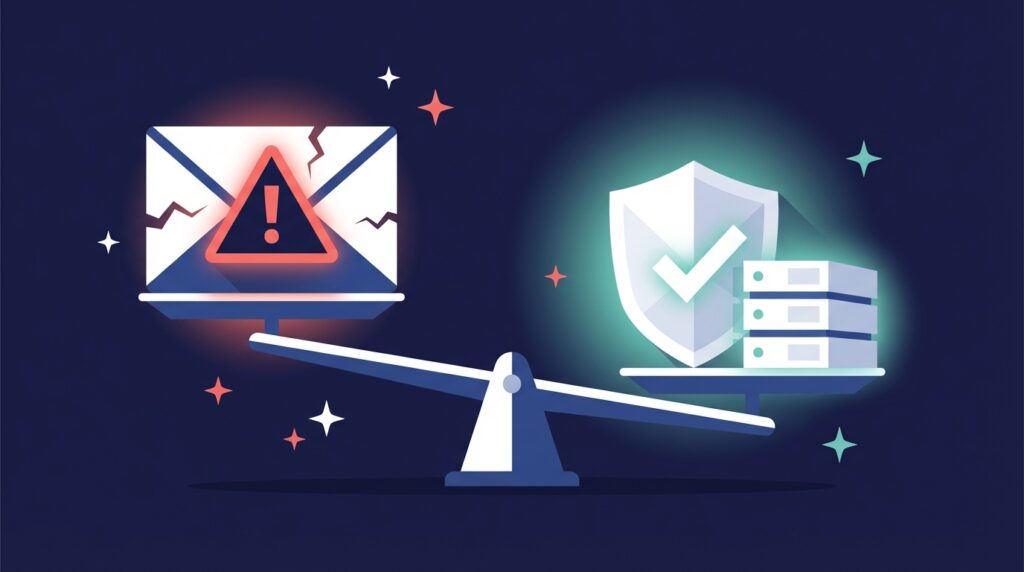
If you care about inbox placement at scale, understanding how filters interpret language matters far more than memorizing a list of “bad words.”
Most silent deliverability failures come from copy. Certain phrases repeatedly appear in low-trust outreach, and inbox providers learn to associate that language with senders whose emails are ignored or deleted. No word is banned outright, but familiar spam patterns steadily reduce confidence.
Cold email faces the highest scrutiny because it begins without trust. With no opt-in or engagement history, small language choices carry disproportionate impact, especially alongside new domains or rising send volume.
This guide breaks down what spam trigger words really are, why they continue to affect deliverability in 2026, and how inbox providers interpret them in context. It includes the main risk categories, a full reference list, and safer ways to phrase your message. By the end, you should be able to write emails that scale without sounding automated or eroding trust.
What are Spam Trigger Words?
Spam trigger words are words or phrases that email filters associate with spam, scam, or low-trust behavior. When these words appear in specific patterns or contexts, they increase the likelihood that an email is routed to spam rather than the inbox.
There is no universal blacklist of words that automatically sends an email to spam. Spam trigger words function as risk signals instead of banned terms. A useful mental model is a credit score. One late payment does not disqualify you from borrowing, but it does move the odds against you. Language works the same way.
Trust is already fragile in cold emails, so such signals carry more weight. Words that might be harmless in a transactional or opted-in message can become high risk when sent from a new domain to a recipient who has never heard of you.
How Spam Filters Detect Trigger Words
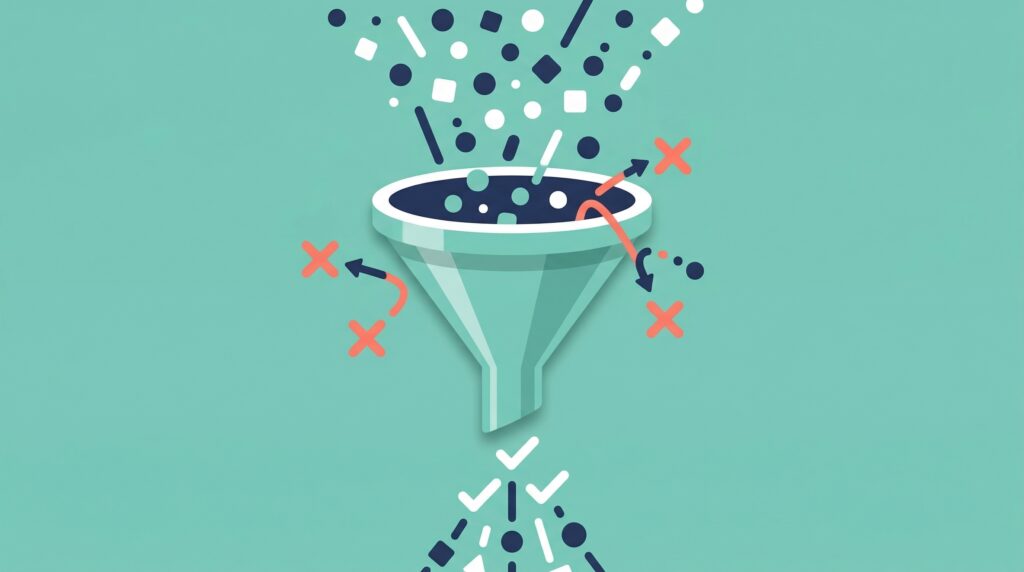
Modern spam filters use machine learning models trained on billions of emails and the actions recipients take after receiving them. The system is constantly learning which combinations of language, behavior, and infrastructure correlate with unwanted or ignored email.
At a high level, filters evaluate language through several overlapping lenses.
Pattern Recognition: Filters look for clusters of words that commonly appear together in spam. A single word like “free” is rarely the issue. A combination such as “free,” “act now,” and “limited time” in the same message is far more likely to raise concern because that pattern strongly resembles historical spam campaigns.
Context Analysis: The same word can carry very different risks depending on how it is used. “Free trial” in a product onboarding flow is generally interpreted as legitimate. “Free money” in a cold email from an unknown sender is not. Filters evaluate surrounding language to infer intent rather than reacting to isolated terms.
Sender Reputation: Your domain’s history determines how strictly your language is judged. High-reputation senders receive more benefit of the doubt. Low-reputation or newly warmed domains are scrutinized far more aggressively, which means language choices matter more, not less.
Engagement History: If recipients regularly delete your emails without opening them, future messages from your domain are evaluated more harshly. Over time, even neutral language can become risky if engagement remains poor. This feeds back into future decisions.
In 2026, spam filters routinely analyze the subject line tone and implied intent, emotional framing such as urgency or reward, call-to-action strength and placement, consistency between subject lines, body copy, and links, and how your language compares to that of trusted senders in similar categories.
Spam trigger words work as part of a broader pattern that signals whether your email looks like something a real person would want to read.
How Do Email Spam Filters Work in 2026?
In 2026, spam filters assess whether a sender and a message resemble behavior users consistently engage with. Filtering has shifted from word detection to system-level pattern recognition.
AI has amplified this dynamic. Large language models have made average outreach copy more uniform, predictable, and pattern-heavy. Filters increasingly recognize AI-shaped phrasing at scale, not as an explicit penalty, but as a signal that blends into low-trust sender behavior when overused or poorly adapted. Cold email is especially exposed because it lacks counterbalancing engagement signals.
Language, infrastructure, engagement, and AI usage reinforce each other. Understanding how spam trigger words actually function allows you to make deliberate tradeoffs instead of blindly avoiding words or relying on outdated heuristics.
Types of Spam Trigger Words
Spam trigger words tend to cluster around a few predictable behaviors. These are not arbitrary categories, and they map directly to the patterns inbox providers have learned to associate with fraud, manipulation, or low-quality outreach.
Below are the three most common and most damaging categories, especially in cold email.
Financial & Money Spam Words
Financial promises are the most reliable indicator of malicious or deceptive email behavior. Phishing campaigns, investment scams, and fake offers overwhelmingly rely on money-related language to create emotional pull. Because of that history, inbox providers treat financial claims as high-risk signals, particularly when they appear without context, evidence, or an existing relationship.
The majority of reported scam emails include some form of direct or implied financial gain. Filters are trained on those outcomes. When your email uses similar phrasing, it inherits that risk whether you intend it or not.
Common Financial Spam Trigger Words
High-risk terms
- Earn cash
- Earn money
- Get paid
- Cash bonus
- Free money
- Free grant
- Free investment
- Fast cash
- Extra income
- Prize
- Cheap
- Hidden charges
- Money back
- No cost
- Refund
Medium risk terms
- Free
- Save
- Bonus
- Credit
- Loan
- Rates
- Discount
These words are not inherently illegal to use. They are simply overrepresented in emails users regret opening.
When Financial Language Is Unavoidable
If you sell software, financial services, or infrastructure, you cannot avoid discussing money entirely. The key is shifting from promises to evidence and from emotional pull to neutral explanation.
Financial claims attract scrutiny by default. The closer they stay to measurable facts and practical context, the more likely they are to be treated as credible by both inbox providers and readers.
Examples
Risky: Save 50 percent. Limited-time discount.
Safer: Most teams in your segment pay $X per seat. Happy to walk through how they calculate ROI.
Risky: Earn money with our platform.
Safer: Customers typically see an 18% reduction in operating costs in the first quarter.
Risky: No hidden charges. 100 percent free trial.
Safer: 14-day trial. No credit card required.
Before and After Email Example
Before:
Subject: Save BIG on your software costs
Hey [Name],
Want to earn back your budget? Our platform helps you save thousands with zero hidden charges. Get started free today.
After
Subject: Question about your team’s tooling stack
Hey [Name],
I noticed your team is using [Tool]. We work with similar companies to reduce tool overlap. Most see around $4,200 per month in consolidated spend.
Would a short walkthrough be useful?
One tries to sell. The other starts a conversation and earns the right to continue it with numbers.
Urgency & Scarcity Spam Words
Urgency language has long been central to scams and phishing because it compresses decision-making and discourages scrutiny. Inbox providers’ model for this behavior makes sender-benefiting urgency patterns especially risky. In cold email, where no relationship exists to contextualize pressure, that sensitivity increases.
Common Urgency & Scarcity Spam Trigger Words
High-risk terms
- Act now
- Apply now
- Call now
- Click now
- Do not delete
- Do not hesitate
- Exclusive deal
- Expires today
- Final call
- Get it now
- Hurry
- Immediate
- Last chance
- Limited time
- Now only
- Offer expires
- Once in a lifetime
- Order now
- Special promotion
- Supplies are limited
- Take action
- Time limited
- Urgent
- While supplies last
- Won’t last
Manufactured vs Legitimate Urgency
Inbox providers make a clear distinction between urgency driven by a real need and urgency driven to advance the sender’s agenda.
Manufactured urgency applies pressure without context. It attempts to accelerate a decision that the recipient has no reason to make yet.
Legitimate urgency reflects actual constraints affecting the recipient and can be evaluated on its own terms.
Manufactured: Act now. Only three spots left.
Legitimate: We are onboarding three new customers in Q1. Does your timeline align with that?
Manufactured: Offer expires Friday.
Legitimate: Our pricing changes in Q2 as new features roll out. Happy to lock current rates if timing works.
Manufactured: Don’t miss out.
Legitimate: Is this something you are prioritizing now, or should I follow up later in the year?”
One approach narrows the recipient’s decision space by applying pressure, while the other supplies context and allows the recipient to decide on their own terms.
Urgency compounds. When recipients repeatedly ignore pressure-driven messages they did not ask for, inbox providers learn that your emails create friction without value. That shows up as faster deletions and tighter filtering over time.
Relevance does the opposite. Language grounded in real timing and recipient context supports healthier engagement as volume scales.
Exaggerated Claims & Hype Words
Absolute claims and vague superlatives are strong indicators of low credibility. Scam emails rely on them because they promise outcomes without evidence. Legitimate businesses rarely need to speak this way, especially in one-to-one communication.
Filters reward specificity because specificity correlates with real businesses and real conversations.
Common Exaggeration & Hype Spam Words
High-risk terms
- 100 percent free
- 100 percent satisfied
- Guarantee
- Guaranteed
- Amazing
- Best price
- Congratulations
- Double your income
- Fantastic
- Greatest
- Incredible deal
- Join millions
- Life changing
- Miracle
- No catch
- No gimmick
- No questions asked
- No strings attached
- Once in a lifetime
- Opportunity
- Promise
- Revolutionary
- Risk free
- Satisfaction guaranteed
- Unbelievable
- Ultimate
The Specificity Principle
Spam filters punish vagueness because vagueness correlates with deception. Specific details, constraints, and numbers signal legitimacy.
Risky: Guaranteed results for your business.
Safer: Reduced response time by 18% for three similar customers.
Risky: Revolutionary platform that transforms everything.
Safer: A different approach to [problem]. Happy to explain how it works.
Risky: 100 percent free. No catch. Risk-free trial.
Safer: 14-day trial. No credit card required. Cancel anytime.
Both recipients and filters respond better when you remove hype and replace it with concrete outcomes
148 SPAM TRIGGER WORDS TO AVOID (2026)
If you send emails at any meaningful volume, this list works best as a pattern reference rather than a checklist. Inbox providers do not penalize individual words in isolation. They evaluate how language clusters combine with sender reputation, engagement history, and formatting to resemble known spam, scam, or phishing behavior.
The list is organized by the type of signal each group sends to modern filters.
Financial Spam Words
These terms are closely associated with scams, misleading offers, and unrealistic monetary outcomes. They receive heightened scrutiny in cold email because financial deception remains one of the most common abuse categories.
- Beneficiary
- Billion
- Cash
- Cheap
- Claims
- Credit
- Debt
- Discount
- Earn
- Extra income
- Fast cash
- Finance
- Financial freedom
- Free grant
- Free investment
- Free money
- Get paid
- Hidden charges
- Income
- Insurance
- Investment
- Loan
- Money
- Money back
- No cost
- Opportunity
- Prize
- Profit
- Rates
- Refund
- Save
- Withdrawal
Urgency Spam Words
Artificial urgency is a dominant pattern in phishing and low-quality mass outreach. When pressure language appears without an existing relationship, filters treat it as a risk multiplier rather than a neutral call to action.
- Act now
- Apply now
- Become a member
- Call now
- Click now
- Deal ending
- Don’t delete
- Don’t hesitate
- Exclusive deal
- Expire
- Expires today
- Final
- Get it now
- Hurry
- Immediately
- Important information
- Info you requested
- Instant
- Last chance
- Limited time
- Now
- Now only
- Offer expires
- Once in a lifetime
- One time
- Only
- Order now
- Please read
- Special promotion
- Supplies are limited
- Take action
- Time limited
- Today
- Urgent
- Urgent response
- What are you waiting for
- While stocks last
- While supplies last
- Winner
- Won’t last
- You have been selected
Exaggeration and Hype Words
These words signal absolute outcomes or inflated promises. Filters do not judge accuracy. They evaluate whether the language matches known hype driven abuse patterns.
- 100% free
- 100% satisfied
- Guaranteed results
- Zero risk
- Fail proof
- Foolproof
- All new
- Amazing
- Best
- Best price
- Big
- Billion
- Bonus
- Congratulations
- Exclusive
- Fantastic
- For instant access
- Free
- Greatest
- Guarantee
- Guaranteed
- Incredible
- Join millions
- Life changing
- Miracle
- Never
- No catch
- No fees
- No gimmick
- No strings
- Once in a lifetime
- Promise
- Revolutionary
- Risk free
- Satisfaction guaranteed
- Success
- Trial
- Ultimate
- Unbelievable
- Unlimited
- We hate spam
- Winner
Promotional and Advertising Words
A cold email that reads like an ad is treated as an ad, without consent. Promotional language increases the likelihood of bulk classification.
- Ad
- Advertise
- Buy
- Buy direct
- Call free
- Click here
- Clearance
- Deal
- Free access
- Free consultation
- Free preview
- Free quote
- Free trial
- Gift
- Here
- Marketing
- Offer
- Order
- Order today
- Subscribe
- Visit our website
- Weight loss
- Work from home
Shady or Suspicious Words
These terms are frequently linked to regulated industries, scams, or artificial credibility signals. Their presence often triggers deeper inspection.
- Confidential
- Copy
- Duplicate
- Meet singles
- MLM
- Multi-level marketing
- Passwords
- Pornography
- Reverses aging
- Viagra
How to Use This List Correctly
Treat this list as a pattern recognition tool.
Spam-prone language typically falls into one or more of the following categories:
- Language that promises transformation, wealth, or outcomes without evidence
- Language that manufactures urgency where none naturally exists
- Language that sounds like advertising rather than conversation
- Language that makes absolute guarantees or removes all perceived risk
- Language commonly found in scams, phishing attempts, or low-trust mass campaigns
If a word or phrase fits one of these patterns, the safer move is not to disguise it but to reframe the message entirely. Clear, specific, and grounded language consistently outperforms hype in both replies and deliverability.
Modern inbox providers prioritize sender reputation and engagement over keyword matching, but language remains a strong contextual signal. Used carelessly, it accelerates spam placement. Used thoughtfully, it reinforces credibility and helps your emails scale without quietly burning the domain behind them.
Safe Alternatives: What to Write Instead of Spam Trigger Words
Don’t tiptoe around “forbidden” words. Just write emails that never needed them in the first place.
Spam-prone language usually appears when a message tries to compensate for weak relevance, unclear value, or manufactured urgency. When you fix those problems upstream, the wording naturally becomes safer for deliverability and more effective with real people.
Here are some frameworks to help you pressure-test your language before sending:
Framework 1: Replace Hype with Specificity
Every superlative should be backed by something concrete.
Vague praise and exaggerated claims signal low credibility because they resemble the language patterns used in scams and low-quality mass outreach. Specifics anchor the message in reality and reduce perceived risk.
❌ Massive results
✅ 18% improvement in pipeline conversion over 90 days
❌ Revolutionary platform
✅ A different approach to outbound that prioritizes reply quality over volume
❌ Huge savings
✅ An average reduction of $4,200 per month in tooling costs
If you cannot quantify it, contextualize it. Specificity builds credibility. Filters and readers alike recognize exaggerated, unsupported claims as manipulative. Anchoring your statements in measurable outcomes signals transparency, reduces perceived risk, and sets realistic expectations that encourage engagement.
Framework 2: Replace Urgency with Relevance
If the recipient feels no urgency, it reads as pressure.
Manufactured urgency is one of the strongest spam signals because it mirrors phishing and aggressive sales tactics. Real urgency is situational and grounded in the buyer’s timeline, not yours.
❌ Act now before spots fill up
✅ Is this something your team is prioritizing this quarter
❌ Limited-time offer expires Friday
✅ Pricing changes in Q2, so I wanted to reach out in case timing aligns
❌ Don’t miss this opportunity
✅ If this is not relevant right now, I am happy to follow up later in the year
Relevance earns attention by respecting the recipient’s timeline and priorities. Manufactured urgency may prompt a click once, but it damages trust over time. Emails that demonstrate awareness of context increase the likelihood of replies and sustained engagement.
Framework 3: Replace Commands with Questions
The rule: Directives feel like ads. Questions feel like conversations.
Cold email performs better when it sounds like a human checking for fit rather than a campaign trying to force action. Questions also reduce filter risk by breaking common promotional phrasing patterns.
❌Click here to schedule now
✅Would a 15-minute call be useful
❌Sign up for your free trial today
✅Would it make sense for your team to test this
❌Download our free guide
✅I can send a short overview if that would be helpful
Questions invite dialogue rather than demanding action. They position you as a collaborator rather than a marketer, which makes recipients more likely to engage. Filters also reward natural conversational phrasing, reducing the likelihood that a message will be flagged.
Framework 4: Replace Absolutes with Ranges
Absolute claims signal low trust.
Words like “guaranteed,” “never,” and “risk-free” are not just marketing red flags. They are statistical anomalies in real business outcomes, which is why filters treat them skeptically.
❌Guaranteed results
✅Most teams see meaningful results within two to four weeks
❌100% success rate
✅About 73% of customers reach this benchmark
❌No risk, no catch
✅ Fourteen-day trial with the option to cancel anytime
Ranges reflect real-world variability, which signals honesty to both readers and filters. Absolute claims feel manipulative because outcomes are rarely universal. Presenting measured expectations builds trust and reduces the likelihood that recipients and inbox algorithms dismiss your message as spam.
Framework 5: Replace Marketing Tone with Conversational Tone
Would you send this exact sentence to a respected colleague?
❌Don’t miss this exclusive opportunity to revolutionize your workflow
✅Thought this might be relevant based on how your team handles [specific workflow]
❌Unlock massive growth with our industry-leading platform
✅We built this for teams struggling with [specific problem]. Happy to share how it works if useful
A conversational tone signals an intent to help rather than to sell. Readers are more likely to respond to messages that feel personal and human. Filters interpret highly stylized, marketing-heavy language as low-trust behavior, so a natural voice improves both deliverability and engagement.
Email Example
Before (Spam Risk: High)
Subject: 🚨 LIMITED TIME: Save 50% Today Only
Hey [Name],
Don’t miss this incredible opportunity. Our revolutionary platform guarantees results and will transform your business overnight.
Act now before this exclusive offer expires. Click here for instant access. 100% risk free.
Only three spots left.
After (Spam Risk: Low)
Subject: Question about [their recent initiative]
Hey [Name],
Saw your team is working on [specific initiative]. We have helped similar companies improve [specific metric] by roughly 18%.
Would a short overview be useful, or would it make more sense for me to send a brief breakdown first?
We replaced urgency, hype, and guarantees with relevance, specificity, and questions. The email now reads like a real conversation, improving reply rates and protecting sender reputation.
Inbox Trust Over Tactics
Spam trigger words tend to fade into the background when the intent behind an email is clear, relevant, and grounded in reality.
Phrases like “free,” “guaranteed,” and “act now” carry the weight of their history. After years of being used to manufacture urgency and extract attention, they now signal risk to modern filtering systems. Today’s inbox providers are trained to recognize patterns of low-trust behavior, and language is one of the strongest signals they evaluate.
Emails that prioritize relevance, rely on measurable claims, and invite dialogue rather than push action typically stay out of spam folders for a simple reason: they read like credible, intentional communication rather than engineered persuasion.
Before scaling, it helps to pressure-test both deliverability and human appeal. Run your templates through tools like Mail Tester or MailGenius and aim for a score above 8 out of 10. Then read the email from the recipient’s perspective and ask whether it feels like something you would genuinely reply to. Finally, test tone and framing in small batches before increasing volume, and watch closely for early warning signs, such as declining open rates or falling spam scores.
Inbox trust comes from clarity, restraint, and intent that remains believable as scale increases.